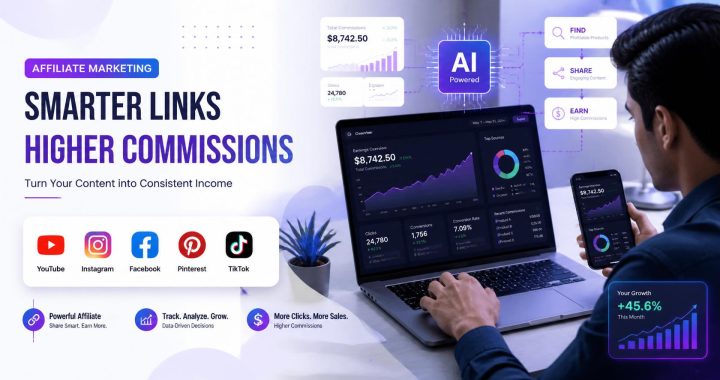
Affiliate marketing is one of the most popular ways to earn money online. Many beginners believe they need a website to become an affiliate marketer. However, that is not true. You can start affiliate marketing without a website and still earn commissions by promoting products through social media, video content, and other online platforms.
In this guide, you will learn how to start affiliate marketing without a website and build a successful online income stream in 2026.
What is Affiliate Marketing?
Affiliate marketing is a business model where you promote products or services through a unique affiliate link. When someone clicks your link and makes a purchase, you earn a commission.
The process is simple:
- Join an affiliate program.
- Get your unique affiliate link.
- Share the link with your audience.
- Earn commissions from sales.
Can You Do Affiliate Marketing Without a Website?
Yes, absolutely.
Many successful affiliate marketers use platforms like YouTube, Instagram, Facebook, Pinterest, and TikTok instead of a website. These platforms provide access to millions of users and allow you to share valuable content with potential buyers.
Benefits of Affiliate Marketing Without a Website
1. Low Startup Cost
You do not need to purchase hosting, domains, or website design services.
2. Easy to Start
Most social media platforms are free to use.
3. Faster Audience Growth
Social media platforms can help your content reach thousands of users quickly.
4. Flexible Work
You can promote affiliate products from anywhere using your smartphone or computer.
Best Ways to Start Affiliate Marketing Without a Website
1. Promote Affiliate Products on YouTube
YouTube is one of the best platforms for affiliate marketing.
You can create:
- Product reviews
- Tutorials
- Unboxing videos
- Comparison videos
- How-to guides
Place your affiliate links in the video description and encourage viewers to check them out.
Tips for Success
- Create helpful videos.
- Use SEO-friendly video titles.
- Add relevant keywords in descriptions.
- Include a clear call-to-action.

2. Use Instagram for Affiliate Marketing
Instagram allows creators to promote products through posts, Stories, and Reels.
Effective Strategies
- Share product demonstrations.
- Create engaging Reels.
- Post customer reviews.
- Add affiliate links to your bio.
- Use relevant hashtags.
Instagram works especially well for fashion, fitness, beauty, travel, and lifestyle products.
3. Promote Affiliate Links on Facebook
Facebook remains a powerful platform for affiliate marketers.
Ways to Promote
- Share valuable posts.
- Join niche-related groups.
- Create a Facebook page.
- Publish product reviews.
- Use Facebook Stories.
Avoid spamming affiliate links. Focus on helping users solve problems.
4. Use Pinterest
Pinterest acts like a visual search engine.
Users often search for:
- Product recommendations
- Buying guides
- Home improvement ideas
- Fashion inspiration
- Digital tools
Create attractive pins and connect them to affiliate content or landing pages.
5. Build an Email List
Even without a website, you can create an email list using lead generation tools.
Benefits
- Direct communication with your audience
- Higher conversion rates
- Long-term marketing opportunities
Send useful content and product recommendations rather than constant sales messages.
6. Use Messaging Apps
Messaging platforms can also help promote affiliate products.
Examples include:
- Telegram
- Discord
Share valuable content, tips, and recommendations with interested users.
Always follow platform guidelines and avoid sending unwanted messages.
Best Affiliate Programs for Beginners
Some beginner-friendly affiliate programs include:
- Amazon Associates
- ClickBank
- CJ Affiliate
- ShareASale
- Impact
Choose products that match your audience’s interests.
How to Get Your First Affiliate Sale
Create Helpful Content
People buy products that solve their problems.
Create content such as:
- Reviews
- Tutorials
- Comparisons
- Tips and guides
Focus on One Niche
Choose a specific niche, such as
- Digital Marketing
- Technology
- Health and Fitness
- Finance
- Education
- Travel
A focused niche helps build trust and authority.
Build Trust
Trust is one of the most important factors in affiliate marketing success.
Be honest about:
- Product benefits
- Limitations
- Personal experiences
People are more likely to purchase through recommendations they trust.
SEO Tips for Affiliate Marketing Without a Website
Even if you do not have a website, SEO still matters.
Use Keywords
Include target keywords in:
- Video titles
- Social media captions
- Profile descriptions
- Hashtags
Optimize Your Profiles
Your profile should include:
- Clear description
- Professional image
- Contact details
- Relevant keywords
Create Search-Friendly Content
Answer common questions that your audience searches for online.
Common Mistakes to Avoid
Spamming Affiliate Links
Posting links everywhere can reduce trust and engagement.
Promoting Too Many Products
Focus on a few high-quality products.
Ignoring Your Audience
Engage with comments, messages, and questions.
Expecting Instant Results
Affiliate marketing takes time and consistency.
Affiliate Marketing Trends in 2026
The affiliate marketing industry continues to evolve.
Key trends include:
- AI-powered content creation
- Short-form video marketing
- Influencer partnerships
- Voice search optimization
- Personalized recommendations
- Social commerce growth
Marketers who adapt to these trends can gain a competitive advantage.
Conclusion
Starting affiliate marketing without a website is easier than ever in 2026. Platforms like YouTube, Instagram, Facebook, Pinterest, and messaging apps allow beginners to reach audiences and generate affiliate sales without investing in a website.
Focus on creating valuable content, building trust, and promoting products that genuinely help your audience. With consistency and the right strategy, affiliate marketing can become a reliable source of online income.
Frequently Asked Questions (FAQs)
Q1. Can I do affiliate marketing without a website?
Yes. You can use social media platforms, YouTube, email marketing, and messaging apps to promote affiliate products.
Q2. Which platform is best for affiliate marketing without a website?
YouTube, Instagram, Facebook, and Pinterest are among the best options.
Q3. Is affiliate marketing free to start?
Most affiliate programs are free to join, making it a low-cost online business model.
Q4. How long does it take to earn money from affiliate marketing?
Results vary, but consistent effort and quality content can help generate sales over time.
Q5. Do beginners need technical skills?
No. Basic social media and content creation skills are enough to get started.